Disclaimer: This post contains affiliate links. As an Amazon Associate, I earn from qualifying purchases at no extra cost to you. [Learn More]
After a stretch away from the hobby, even with a few completed projects under my belt, I came back to the painting desk with a lingering doubt.
I still enjoy painting. There are moments where I procrastinate starting or finishing a project, but once I settle into a rhythm, the process takes over. That part hasn’t changed.
What I wasn’t sure about was whether I was still good at it.
The models I had finished recently leaned heavily on drybrushing and contrast paints. Efficient, familiar, and effective—but also safe. After a while, it started to feel like I was working around the craft instead of through it.
Layering has always been a weak point for me. Basecoats go down clean, shading brings out the depth, and then comes the part where the model either comes together or falls apart—bringing the color back up.
That stage demands control. Paint has to be thin, but not so thin that it runs. The brush needs enough load to move smoothly, but not so much that it floods detail. Placement matters just as much as consistency. A small mistake can undo the work the shading step just revealed. Even color choice plays a role—push it too far, and transitions stop reading naturally.
It’s a balancing act, and it’s never been where I feel most confident.
So I decided to test it.
I wanted to paint a model using only layering—not because it’s “better,” but to see if the skill was still there.
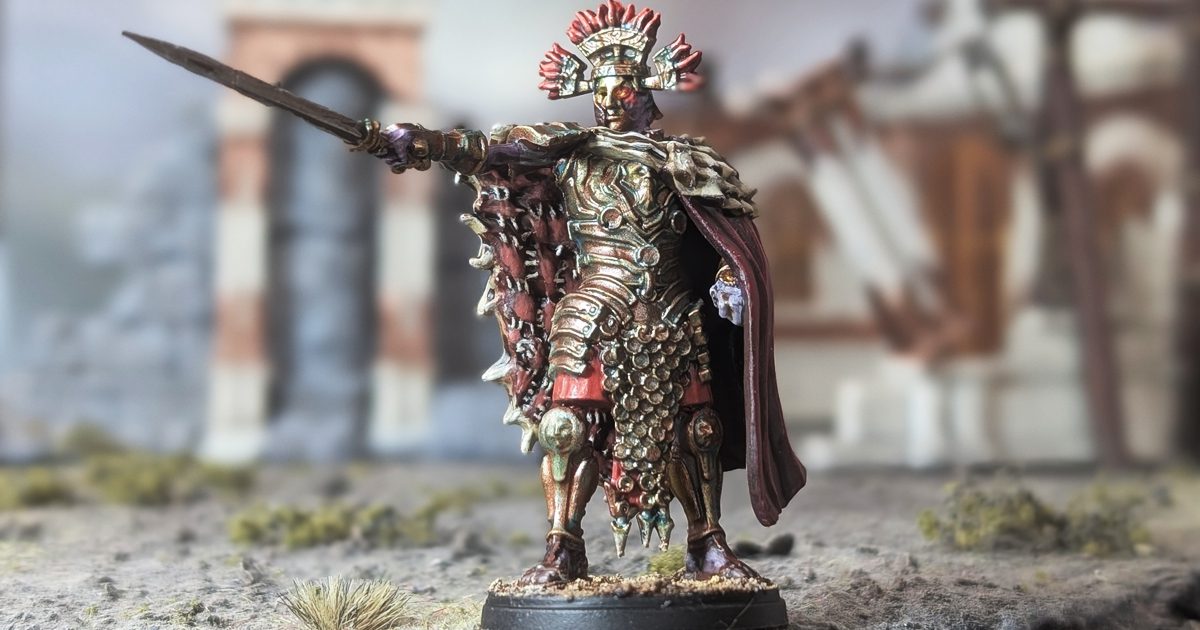
The Xhiliarch became that test.
Why This Model
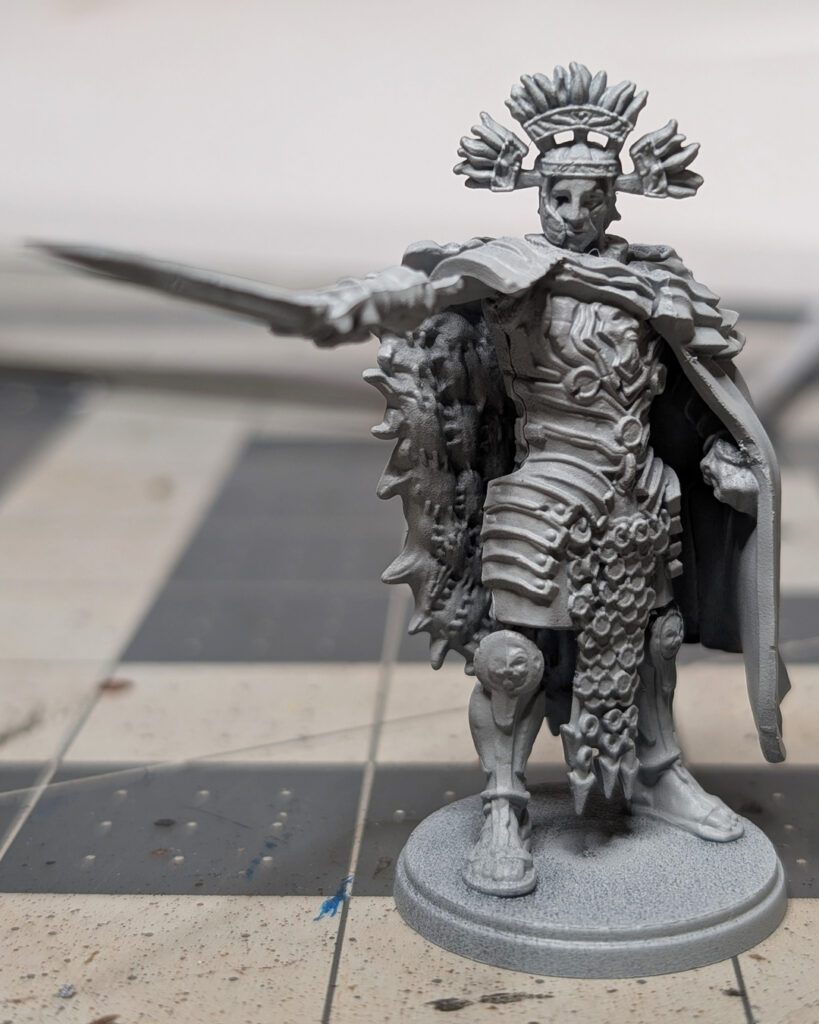
I picked up the Xhiliarch at a discount from a local shop, and it ended up being exactly what I needed.
I do have an Old Dominion force, but it’s not something I’m actively playing. Like a lot of projects, it’s been sitting in the gray pile for a while. That took the pressure off. There was no need to match an army standard, no urgency to get it done quickly, and no real downside if it didn’t turn out well.
Just a model, and a simple question:
Can I still paint the way I used to?
The Constraint: No Shortcuts
For this project, I removed the tools I’d been relying on:
- No contrast paints
- No drybrushing
Everything followed a traditional workflow:
Base → Shade → Layer → Highlight
Some areas of the sculpt—fur, ringmail, rough textures—practically called for drybrushing. Ignoring that instinct was part of the exercise.
What I Found While Painting
I didn’t struggle to layer—but I definitely felt the difference.
It required more attention than I’d been giving my models. Brush control, paint consistency, placement, and color all needed to be dialed in. There wasn’t much room to coast.
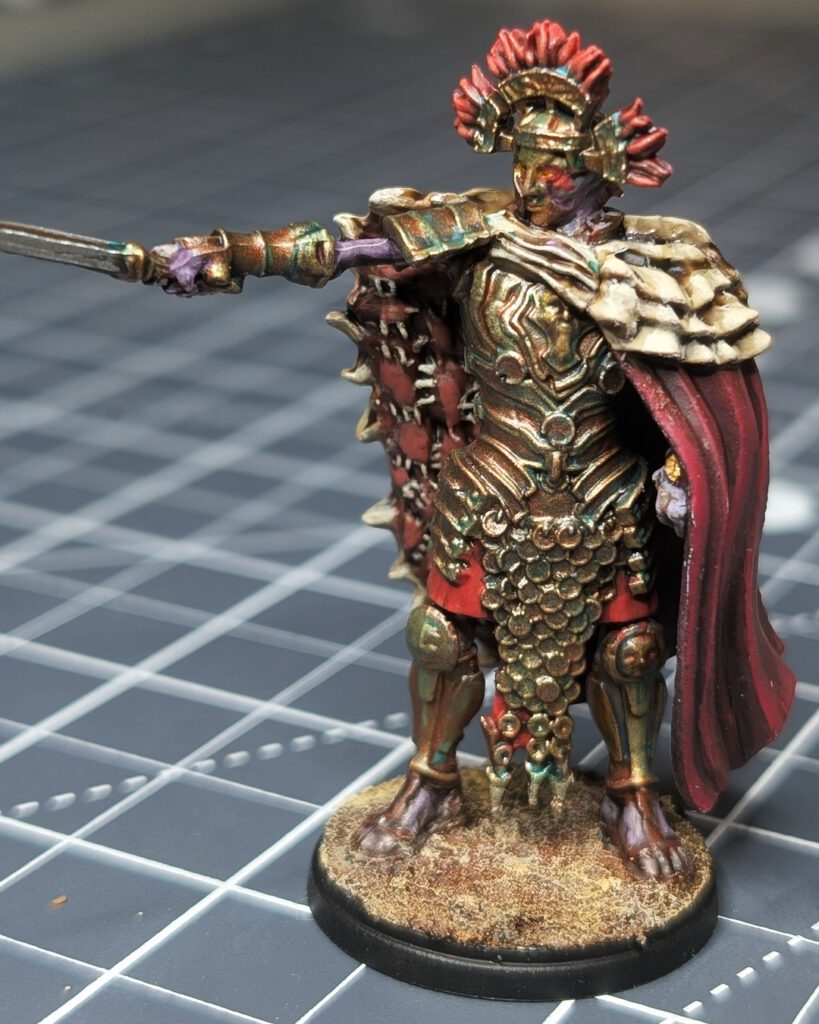
On smoother surfaces, the effort paid off. Armor plates and cloth benefited from the control. Transitions felt intentional and clean.
Textured areas told a different story.
Fur and ringmail took far longer to build up, and even after the extra time, the result didn’t feel noticeably better than what a well-placed drybrush or contrast application could achieve much faster. While working through the fur on the cloak, it was hard not to think how easily a base of Wraithbone followed by Skeleton Legion—and maybe a light pass of Screaming Skull—would have handled it.
I stuck with the process, but the return didn’t always justify the effort.
That realization stayed with me.
The Shift in Perspective
Going into this, I wanted to get back to “proper” painting.
What I came away with was a better understanding of when each method actually makes sense.
Drybrushing and contrast paints solve specific problems, especially on textured or complex surfaces. Used well, they’re efficient and effective.
Layering offers control, particularly on smoother areas where precision matters.
The difference isn’t about which method is better. It’s about what the surface in front of you needs.
Where the Model Fell Short
I’m happy with the model overall, but a couple areas didn’t land the way I wanted.
The Eye
The eye reads, but it lacks sharpness. This came down to pacing. I rushed it. Fine details like this don’t give you many attempts—two, maybe three before paint buildup starts to obscure the sculpt.
I’ve run into this before. There’s a point where patience matters most, and it’s easy to push through instead of stepping back. The fix is straightforward: slow down, limit attempts, and give each pass more intention.
The Patina
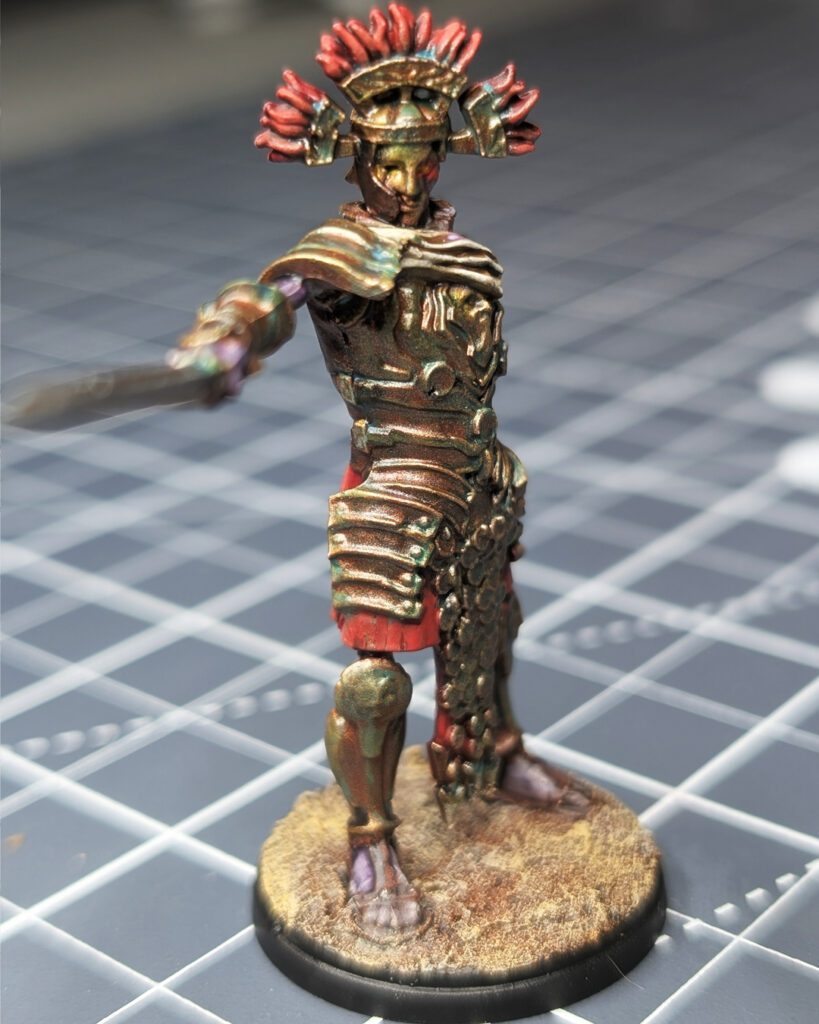
This was the bigger miss. The goal was to add a green patina to the bronze and gold areas to increase contrast and visual interest. Instead, it muted everything underneath.
The mix was too thin, and the color didn’t have enough presence. It spread across surfaces instead of settling into recesses, which flattened the highlights and reduced overall contrast.
Next time:
- Use a richer mix with less Citadel Lahmian Medium
- Let the green – like Citadel Lupercal Green – carry more weight
- Apply it more selectively
- Reintroduce highlights afterward to bring the contrast back
What This Project Taught Me
This project wasn’t really about relearning layering. It clarified when layering is worth the effort.
It’s easy to fall into thinking in terms of “right” and “wrong” techniques, especially after time away. In practice, different surfaces call for different approaches:
- Smooth armor and cloth benefit from controlled layering
- Organic textures like fur and bone respond well to drybrushing
- Deep recesses and complex details can be handled efficiently with contrast-style paints
The skill isn’t tied to one method. It shows up in the decisions you make while painting.
Final Thoughts
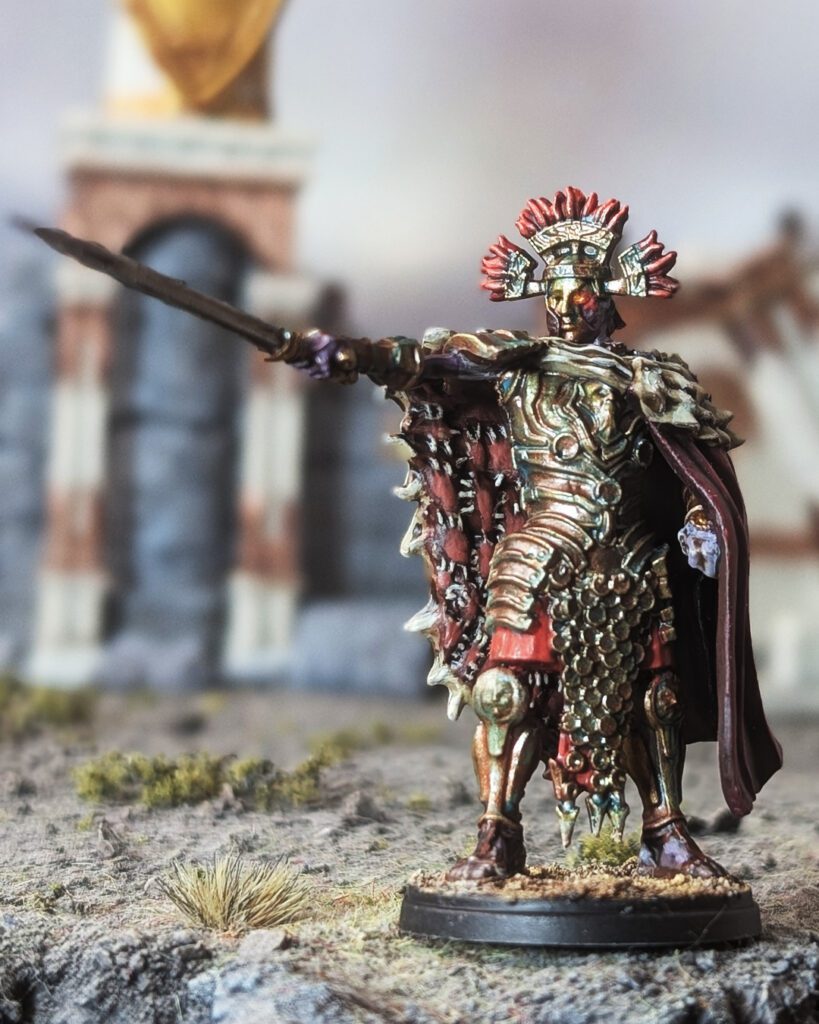
I’m glad I approached the Xhiliarch this way.
Working through the full process confirmed that the fundamentals are still there—they just needed to be exercised. At the same time, the tools I’ve been using aren’t replacements for those fundamentals. They build on them. Going forward, the goal isn’t to rely on one approach. It’s to choose the right one for the job, with intention.
When to Layer vs Drybrush vs Contrast
Layering
- Smooth armor panels
- Cloth with visible transitions
- Focal points where precision matters
Drybrushing
- Fur, hair, and organic textures
- Chainmail and rough metals
- Stone and basing elements
Contrast / Speed Paints
- Deep recess detail
- Complex sculpted areas
- Fast basecoating with built-in shading