Disclaimer: This post contains affiliate links. As an Amazon Associate, I earn from qualifying purchases at no extra cost to you. [Learn More]
Brush Care Begins Before You Finish Painting
One of the biggest lessons I’ve learned is that brush care doesn’t start after the painting session.
It starts while you’re painting.
Every few minutes, rinse your brush thoroughly. Wipe away excess moisture on a paper towel. Reshape the tip before loading another color. Don’t let paint sit in the brush while you’re deciding what highlight comes next.
These tiny habits take only seconds, but over the course of months they make a tremendous difference. If you’ve ever wondered why experienced painters seem to keep the same favorite brush for years, this is often the reason. They’re maintaining the brush throughout the painting session instead of trying to rescue it afterward.
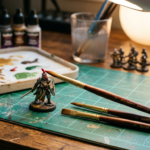
Another tool that’s quietly improved my brush care routine is a good miniature painting handle. At first glance it doesn’t seem related to brush maintenance, but it solves several problems at once. Holding the model by a handle instead of the miniature itself keeps paint off your fingers, which means less paint accidentally ends up back on your brush. It also prevents those frustrating moments where you carefully finish a highlight only to smudge it while rotating the model in your hand.
It’s a small workflow improvement, but like so many things in this hobby, small improvements repeated hundreds of times make a noticeable difference.

- Easy to use
- Good product for use
- Good performance
- Good quality

Brush Rescue: A Real-World Test
While writing this article, I decided to stop talking about brush care in theory and put it to the test.
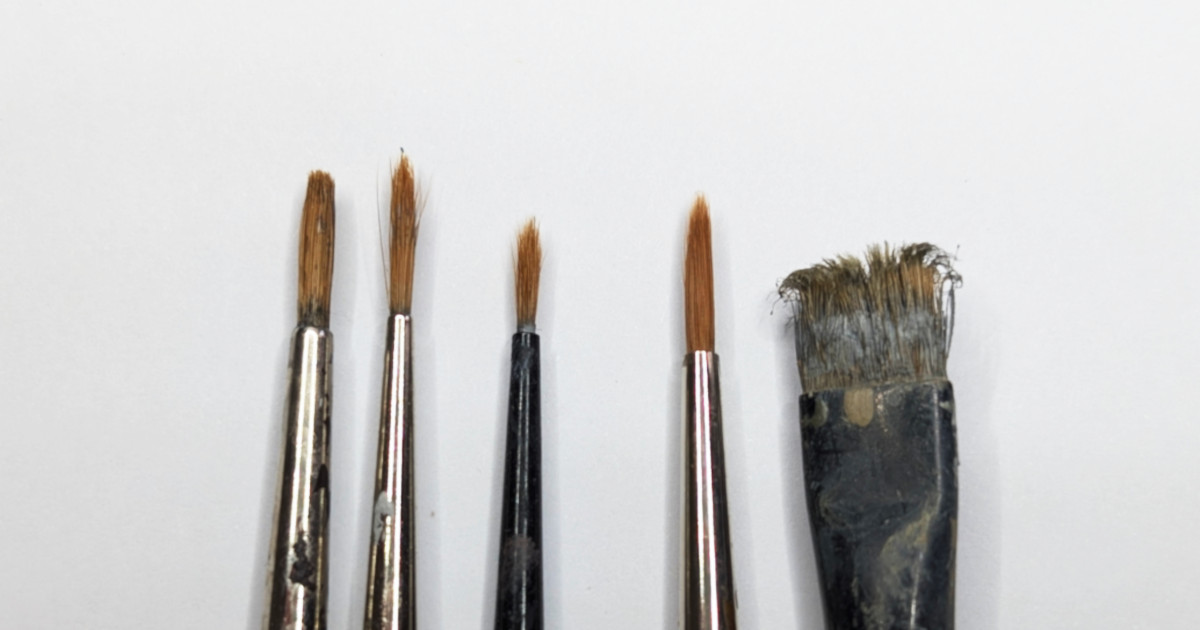
I grabbed five brushes from my hobby desk that were all suffering from different problems. Four were detail brushes that had begun to lose their points over time, while the fifth was an old drybrush that had endured years of abuse and had become stiff with dried paint.
Some had paint worked into the ferrule. Others had begun to splay. One had a hooked tip that made painting fine details almost impossible.
Rather than simply recommend a brush cleaner, I wanted to see how much difference a proper cleaning could actually make.
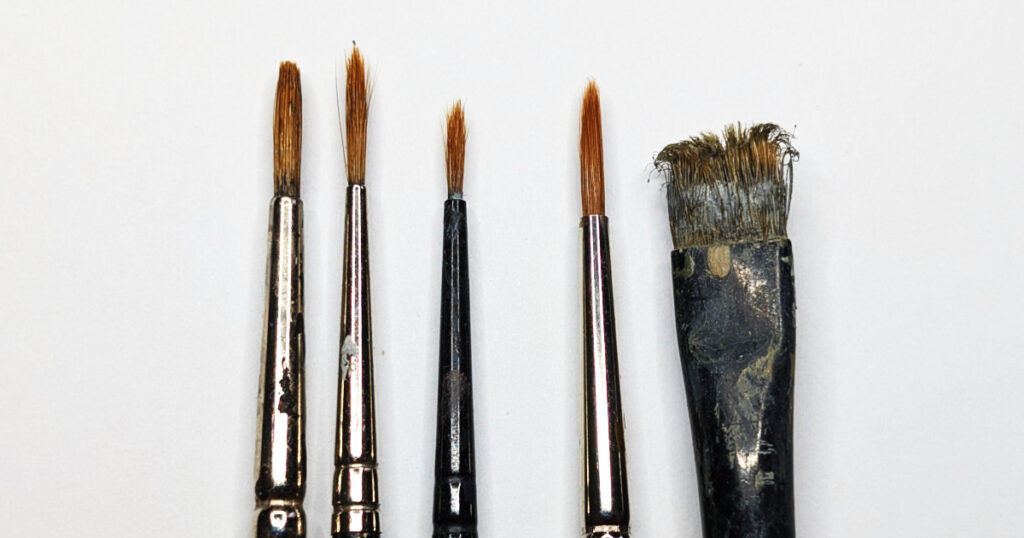
As you can see in the image above these brushes haven’t been cleaned properly. There is paint still caked in the bristles, and there is dried paint on the inside and outside of the ferrule. The paint on the outside of the ferrule is likely from me not using a paint handle to hold a figure. The paint smudges off of the model, onto my hands, and then all over anything else I touch including brushes and the model I’m working on. This is an obvious workflow issue – working against me. It slows the painting process and lowers the quality of the paint job.
The 4 brushes on the left require a deep cleaning. The drybrush I added to the process to see what we can do with it. It likely cannot be salvaged because it looks like it was used and just not washed, or the brush was used for a long duration (large model or vehicle) and not cleaned before the paint started drying.
My Brush Cleaning Routine
When I finish painting for the evening, cleaning my brushes has become part of putting the hobby away.
I start by rinsing each brush thoroughly in clean water before reaching for brush soap. Rather than aggressively scrubbing the bristles, I gently work the cleaner into the hairs using small circular motions until pigment begins lifting out of the brush. Sometimes I repeat this process several times before the soap finally stays clean.
For brushes with heavier paint buildup, I’ll work the cleaner deeper into the bristles and let it sit for several minutes before rinsing again. It’s amazing how much dried acrylic can still come out of a brush you thought was already clean.
Once I’m satisfied, I rinse the brush thoroughly, reshape the point with my fingers, and prepare it for drying.

- “The Masters” Brush Cleaner is the world’s finest total care product for brushes that cleans and conditions in one step.
- Formulated for use with artist paints, ink, dye, stain, and varnish. Also works with house paint, grass stains and grease!
- Can even remove old dried on paints and stains – allow product to sit on brush up to several hours when removing dry paint.
- Non-abrasive cleaner won’t harm synthetic or natural hair brushes like Kolinsky sable.
- Made in the USA by General Pencil Company to ACMI AP Non-Toxic standards.
Why I Started Using a Paint Puck
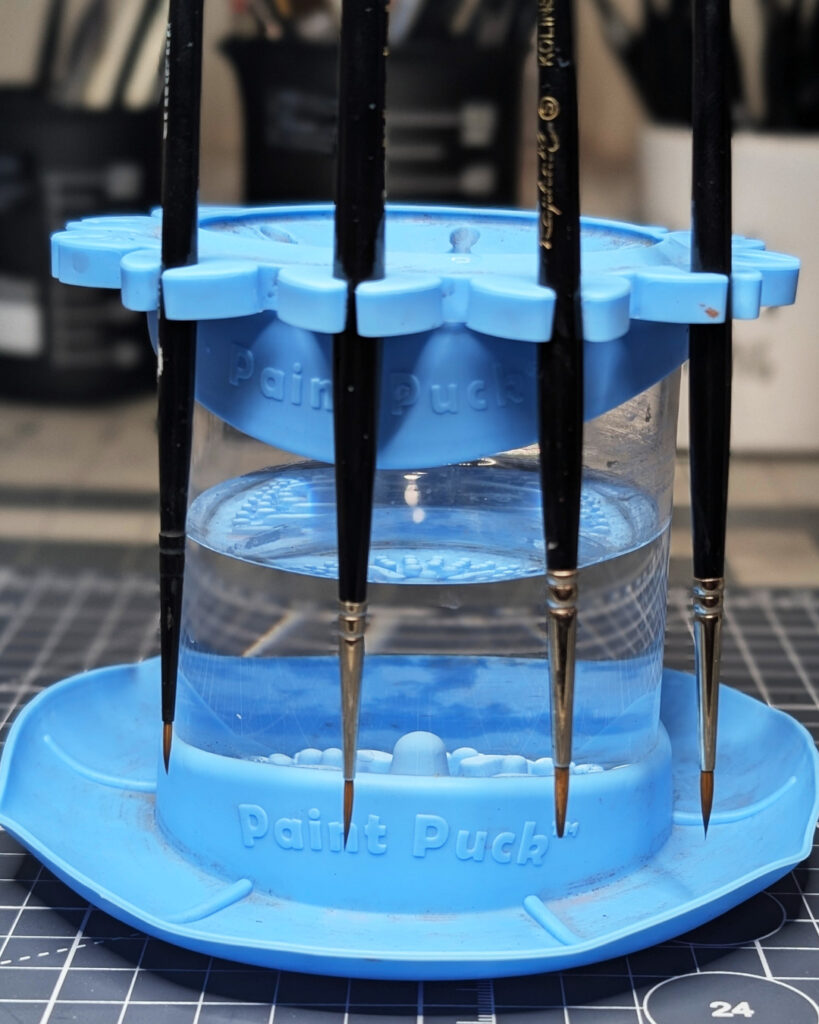
One tool I didn’t expect to appreciate as much as I do is the Paint Puck.
Instead of grinding my brushes against the bottom of a water cup, the silicone ridges gently work paint from the bristles while helping preserve their shape. It’s a simple idea, but it makes cleaning feel much more controlled.
Where it really surprised me, however, was with drybrushes.
Unlike a fine detail brush, drybrushes have thicker, coarser bristles that trap dried paint much more easily. Working those bristles across the silicone ridges does an excellent job of loosening stubborn pigment without feeling like I’m abusing the brush even more.
The built-in drying hangers have also become one of my favorite features. I usually keep several drybrushes in rotation during a painting session, so instead of waiting for one to dry after cleaning, I simply hang it on the Paint Puck and grab another. By the time I cycle back around, the first brush is usually dry and ready to go again.
That small change keeps my painting sessions moving instead of stopping every few minutes to wait for a brush to dry.

- MULITIPURPOSE BRUSH CLEANER – Designed for kid’s classrooms, art studios, and home use, our rinse cups can be used for acrylic, watercolor, and water-based paints.
- BUILT-IN BRUSH HOLDER – This paint brush cleaner tool features a flexible, silicone lid with small brush resting areas inside the cup and outside to hold brushes while they’re rinsing out or not in use. The outside of each lid boasts paint brush holders that keep brushes upright and drying off while protecting surfaces from wet paint.
- SILICONE BRISTLE CLEANER – The bottom of each artist paint brush cleaner rinse cup is designed with silicone rubber that removes paint without damaging soft bristles.
- WIDE, WATER-CATCHER BOTTOM – Designed to keep surfaces safe and not only your brush clean, but the area around you. A wide, stable base collects excess water and paint.
- EASY TO CLEAN – This brush cleaning dish is easy to clean and dishwasher safe.
The Results
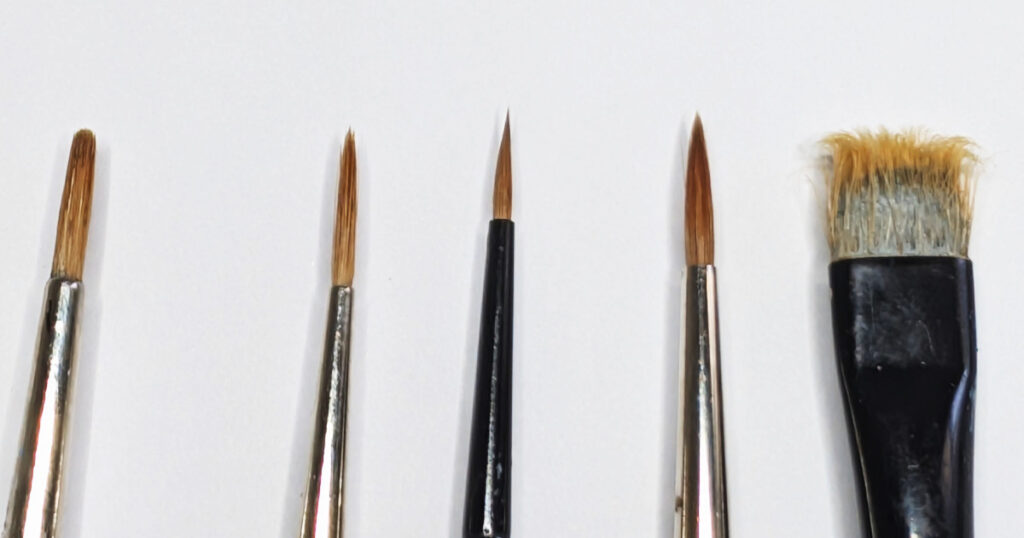
After the brushes had dried overnight, I compared them to how they started.
Honestly, I was impressed.
Four of the five brushes recovered remarkably well. Their points came back, the bristles felt noticeably softer, and they were once again capable of detail work that I would have struggled to achieve before cleaning them.
The only brush that didn’t make a full recovery was my oldest drybrush.
That wasn’t surprising.
Drybrushes live a much harder life than detail brushes. Years of scrubbing across textured surfaces, dried paint, and worn bristles had simply taken their toll.
Even so, it wasn’t a complete loss.
While I wouldn’t rely on it for traditional drybrushing anymore, cleaning restored enough flexibility that I can still use it for extremely light drybrushing, stippling, weathering powders, or applying texture. Instead of throwing it away, it simply graduated to a different job on the hobby desk.
Can You Rescue a Damaged Brush?
The answer is…usually.
If paint has simply built up around the ferrule, a thorough cleaning can often restore much of the brush’s original performance. Brushes that have permanently bent hairs or physically damaged bristles may never return to their original condition, but even those brushes often have years of useful hobby life left in them.
An old detail brush might become your favorite brush for metallic paints. A worn drybrush can still excel at stippling or weathering. A brush that’s no longer perfect doesn’t have to be useless. Sometimes it simply needs a new purpose.
My Brush Care Routine
✓ Rinse every few minutes
✓ Never load paint past the first third of the bristles
✓ Clean with Masters Soap after every session
✓ Reshape the point
✓ Dry horizontally or tip-down
✓ Store dry
Continue Your Painting Journey
Why Every Miniature Painter Should Use a Wet Palette
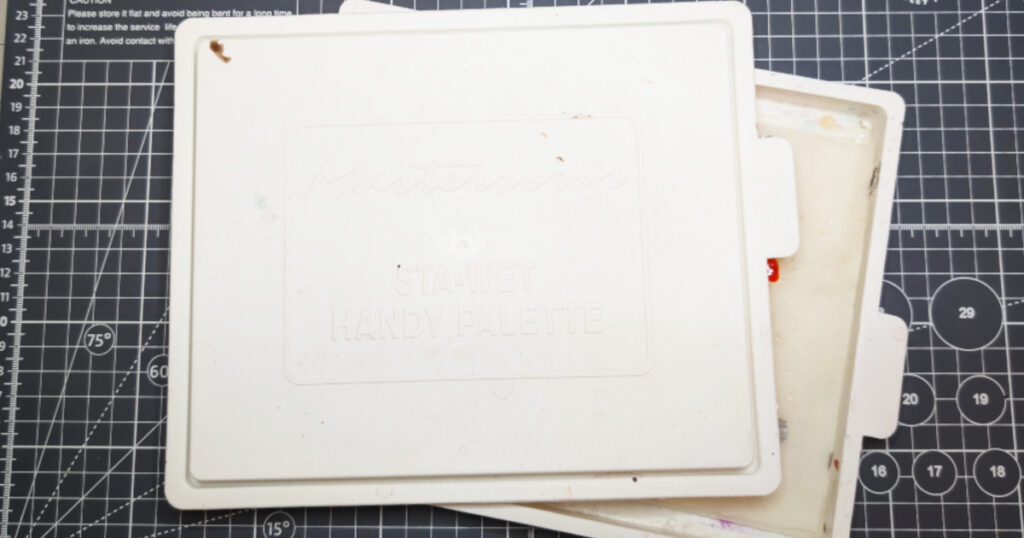
Your brushes aren’t the only thing that benefits from good painting habits. A wet palette keeps acrylic paints workable for hours, reducing the chance of thick, tacky paint drying on your brush and working its way into the ferrule. If you’re still painting from a dry palette, this simple upgrade can improve both your results and the lifespan of your favorite brushes.
Build a Miniature Painting Workspace You’ll Love
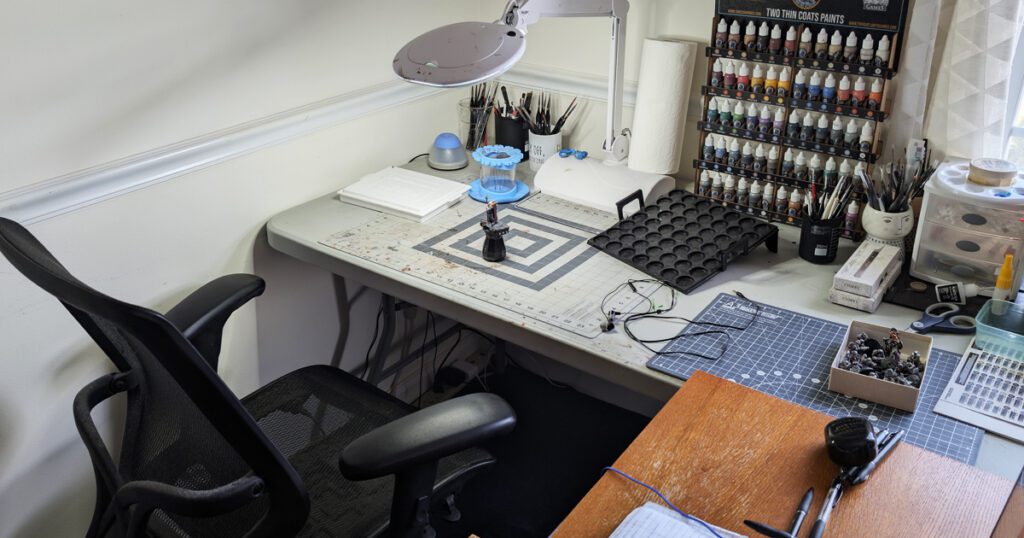
Good brush care is only one part of an enjoyable painting session. A well-organized workspace helps you paint longer, stay focused, and keep your tools in better condition. From lighting and paint organization to brush storage and essential hobby equipment, here’s how to create a painting space that supports your hobby instead of fighting against it.