Most people think their lack of motivation is a discipline problem. In many cases, it’s actually an environment problem. Your workspace is either quietly supporting the work you want to do, or it’s constantly draining your energy before you even begin.
Clutter, missing tools, poor organization, and endless preparation steps create invisible friction. The result is predictable: projects get delayed, enthusiasm fades, and before long you find yourself scrolling through social media or playing video games instead of working on the thing you actually wanted to create.
It’s not always laziness. Sometimes the environment itself is working against you instead of helping you work.
You need to hang a picture on the wall. It should be a simple five-minute task. But, first you need to find the hammer. Then the nails. Maybe a level and that elusive roll of painters tape you know you have…somewhere.
Now you’re digging through drawers, toolboxes, and storage bins trying to remember where everything ended up the last time you used it. You ask your significant other, but they just ask if you looked in places you’ve already looked.
Thirty minutes later you finally locate most of what you need. By the time you’re ready to start, you’re already frustrated and your enthusiasm is gone. A fun little project that would have otherwise made you feel accomplished has now turned into a hassle. You might get hasty, make mistakes, accidentally break something. The task itself shouldn’t be difficult.
The environment made it difficult.
When tools and materials don’t have clear homes, even small projects become exhausting scavenger hunts, and those little frustrations quietly chip away at your motivation. It doesn’t stop here – other creative projects you’ve planned are now off the table because you are emotionally spent.
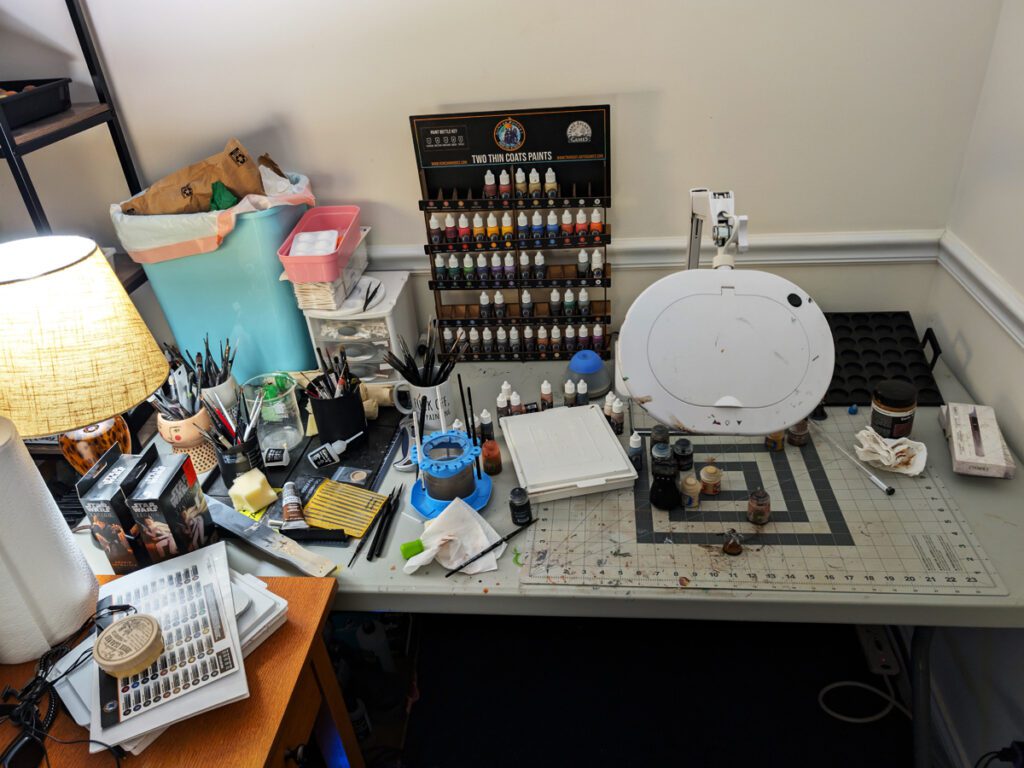
My paint desk often looks like this during a project. But, easy clean up and everything in arm’s reach makes the next project easy to start.
Clutter Quietly Drains Your Energy
Disorganization doesn’t just waste time. It drains mental and emotional energy. This energy is required to engage in craft and creativity.
Your brain is constantly asking small background questions:
Where did I put that? Do I even have the tool I need? Is it worth starting this right now?
These questions create friction. A little uncertainty here, a small delay there. Those tiny obstacles stack up and compound until starting the project feels heavier than it should.
At that point your brain starts looking for easier alternatives. Something that doesn’t require effort or decision making. That’s when procrastination creeps in. It’s not because you don’t care about the project – but because the environment around you makes the project feel unnecessarily difficult to start.
The Trap of Over-Sequencing
Another motivation killer is something I call over-sequencing. Over-sequencing happens when a project requires too many steps before the actual work can begin.
For example, imagine wanting to paint a miniature model. But before you can paint, your brain starts running through the checklist:
I should clean the desk first. I need to organize the paints. I have to find the right brushes. Maybe I should set up better lighting. I should probably look up some reference photos.
Before long, something that should be a relaxing creative activity now feels like a ten-step preparation process. So you decide to wait. Or you skip it entirely. Procrastination sets in.
When every project comes with a long checklist before the real work begins, motivation collapses. The brain craves progress and visible rewards, not endless setup. An organized, ready workspace eliminates most of those steps before they even start.
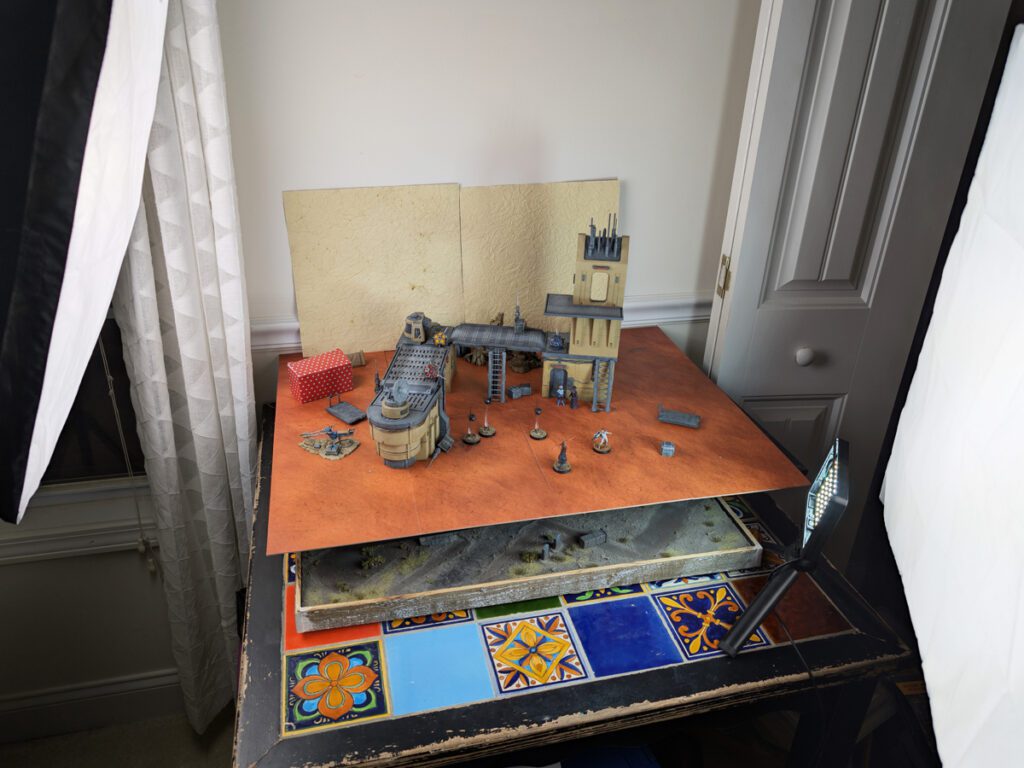
Messy but functional photography station. Portable lights and stored props make reconfiguration take moments.
Designing a Workspace That Supports Creation
The solution is surprisingly simple. Your workspace should remove friction between you and the work you want to create.
In my own studio – the Mythic Minis Studio – every area has a specific purpose designed to support different parts of the creative process.
My painting and modeling desk is fully equipped with everything needed to start immediately. A craft mat protects the surface, good lighting keeps details visible, and a magnifier helps with fine work. Paints, brushes, and modeling tools are all within arm’s reach, and I make a clean wet palette with every new project.
Next to the painting station is my computer. My desk and painting table are in an L-shaped setup that uses the same chair. That allows me to quickly pull up reference images, check paint conversions, upload photos from my phone to zoom in on details, or write down notes about what I’m working on without leaving the workspace.
In other areas of the studio, there’s a comfortable chair nearby if a friend visits and we want to look at something on the computer together.
For photography, I use a separate four-by-four table with open space around it for lighting setups and staging miniatures.
The closet stores boxes of models along with terrain pieces and photography props. A tall shelving unit holds extra paints and basing materials that I don’t use every day but still want easily accessible. Finally, a display cabinet holds finished models so I can enjoy seeing the work once it’s complete and share it with visitors.
Each station has a clear purpose. Nothing is random. Everything has a home. It’s not always pristine, and I certainly have my fair share of clutter and crap laying around. But everything is in its place enough that clean-up or set-up takes moments instead of hours.
The result is a space that feels calm, organized, and ready for creative work.
Remove Friction and Creativity Follows
A good workspace doesn’t need to be fancy or expensive.
What matters is that it supports the work you want to do. When tools have a home, rooms are designed for specific function, and workstations are designed for specific tasks, you eliminate the frustration of searching, rearranging, and preparing every time you want to start something.
The barrier between idea and action becomes smaller. And when that barrier disappears, creativity becomes much easier to access. If starting projects always feels harder than it should, the problem might not be motivation. It might be your workspace. Sometimes the most productive thing you can do isn’t forcing yourself to work harder. It’s simply creating an environment that makes starting easier.
Keep Building Creative Momentum
Join the Mythic Minis Workshop, where I share ideas about creative workflow, miniature painting, workspace design, and finishing the projects we start.
If you’d like to receive new articles from the Mythic Minis Method series, you can join the workshop below.
Continue the Mythic Minis Method
Many creative projects don’t fail because of lack of skill. They stall because motivation disappears when a project is almost finished. The next article in the Mythic Minis Method explores why this happens — and how to push through it.
Mythic Minis is reader-supported. When you buy through our affiliate links, we may earn a small commission—never costing you anything extra. Your support helps us keep creating miniature painting and hobby resources for everyone.


No responses yet