
Most miniature painters enjoy the early stages of a project. Opening a new box, assembling the model, choosing colors, and laying down the first coats of paint all feel productive. Progress is visible and exciting. The miniature begins to transform quickly, and the vision you had when you first saw the sculpt starts to take shape.
But something important happens near the end of many projects.
The energy that comes with starting something new fades, and the remaining work becomes slower and more deliberate. At that point many models stall. They sit on the desk nearly finished, waiting for a few final highlights, details, or basing work that somehow never gets done. Learning to push through that final stretch changes more than just the model.
It changes the painter.
The Illusion of Progress
Miniature painting includes many activities that feel productive. You might spend time buying new kits, organizing paints, assembling models, priming miniatures, researching techniques, or watching painting tutorials. All of these steps are part of the hobby. They are necessary to move a project forward, but they are not the same thing as creation.
Creation happens when an idea is carried through to completion.
Your desk can be full of activity – assembled models, primed figures, half-painted projects – and still produce very few finished miniatures. It’s easy to feel like a busy hobbyist, but you are not seeing improvement of the number of completed pieces.
The difference between hobby activity and creative work often comes down to a single question:
Did the model reach the finish line?
This idea sits at the core of the Finish What You Start approach to miniature painting.
Executing the Vision
When painters see a new model, something immediately happens in the imagination – we begin to picture possibilities. A particular color scheme might come to mind. Perhaps the model would look good with glowing runes, dramatic lighting effects, weathered armor, or a scenic base. Even before the model is assembled, a rough idea begins forming in our minds.
In that moment the miniature becomes more than plastic – it becomes an idea. But, ideas remain incomplete until they are executed.
Finishing a model means following through on that original vision. The result may not look exactly the way you imagined at first, but the important thing is that the idea was carried all the way through the process. What began as imagination becomes something real sitting on your desk, display shelf, or perhaps as a regular on the tabletop. This is also where real improvement in the craft happens.
Perhaps you attempted object source lighting for the first time. Maybe you experimented with a new basing style, or tried pushing your highlights brighter than usual. The final result might not resemble the flawless box-art miniature we sometimes romanticize in our minds.
The act of finishing the model completes an important cycle:
Idea → Experiment → Adjustment → Completion.
Each finished model represents a full learning experience. Even when the result is imperfect, the painter gains something valuable: practical knowledge that can only be gained through doing the work. The next time you attempt a similar technique or style, you begin from experience instead of theory or tutorial.
The Power of Crossing the Finish Line
The final portion of a project builds something that the early stages does not.
Starting a model builds enthusiasm.
Finishing a model builds discipline.
The last twenty or thirty percent of work often requires careful attention – clean highlights, corrected details, refined contrast, and completed basing. These steps are slower, but they develop the patience and control that strengthen a painter’s skill over time.
Crossing the finish line produces several important results:
It builds confidence:
You prove to yourself that you can carry a project all the way through.
It develops skill:
The small decisions and refinements near the end of a project sharpen technique and judgment.
It creates momentum:
Once you have finished one model, starting and finishing the next becomes easier. Each completed miniature becomes a reference point you can build upon until you have a vast library of ability.
Finished Imperfect Work Is Still a Victory
One of the most common reasons painters hesitate near the end of a project is the fear that the model is not good enough. At that stage the miniature already looks decent, and there is always a concern that one mistake might make things worse. A highlight might be too bright, a color choice might feel uncertain, or a detail might not come out exactly as planned.
But a finished model, even an imperfect one, is far more valuable than a project that never reaches completion. Every completed miniature contains lessons. It represents decisions made, techniques attempted, and experience gained. The painter can study it, improve upon it, and carry those lessons forward into the next project.
Unfinished models, on the other hand, rarely teach very much. They simply sit, sometimes they taunt you, or help you remind yourself that you are a failure. I’m joking about that, of course, but in all seriousness a catalog of unfinished models is a reminder of unrealized visions, and that can weigh heavy on motivation and confidence.
The Display Shelf Test
One simple way to measure progress in miniature painting is to look at your display shelf. Every finished model represents a completed act of creation. It reflects the time invested, the techniques attempted, and the vision that was carried through to the end.
Over time, a shelf of finished miniatures tells the story of a painter’s development. Early models may be simple, while later ones show more confidence, stronger contrast, or more ambitious techniques. But each one exists because the painter followed the idea all the way to completion.
A Brief Example
Large centerpiece models often encourage painters to commit fully to finishing a project.
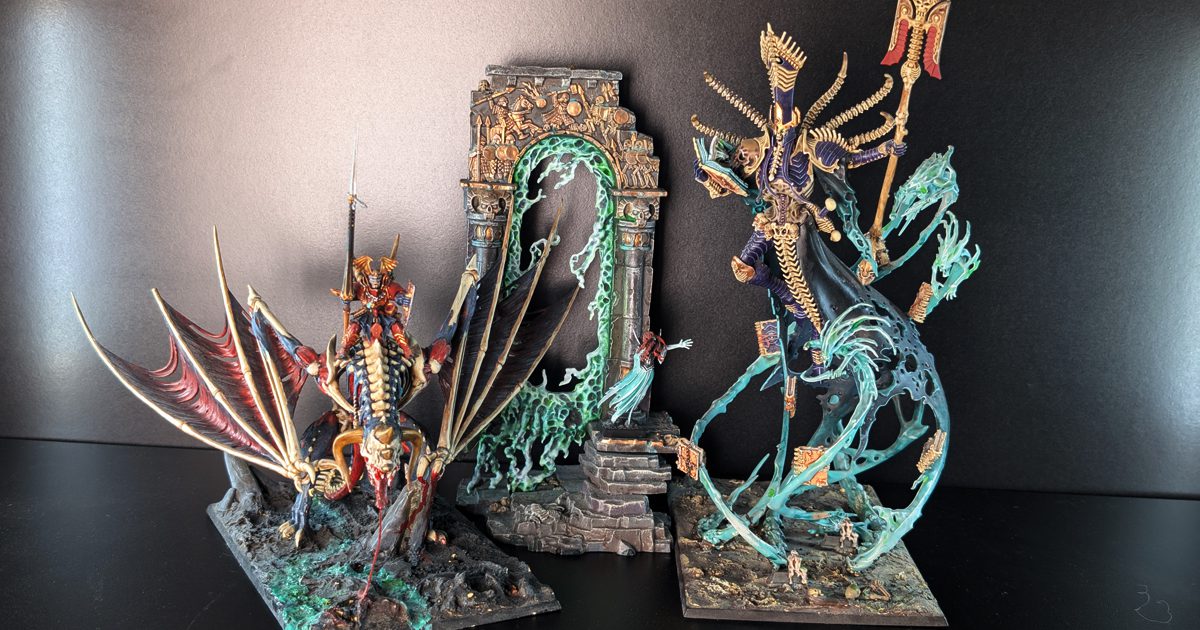
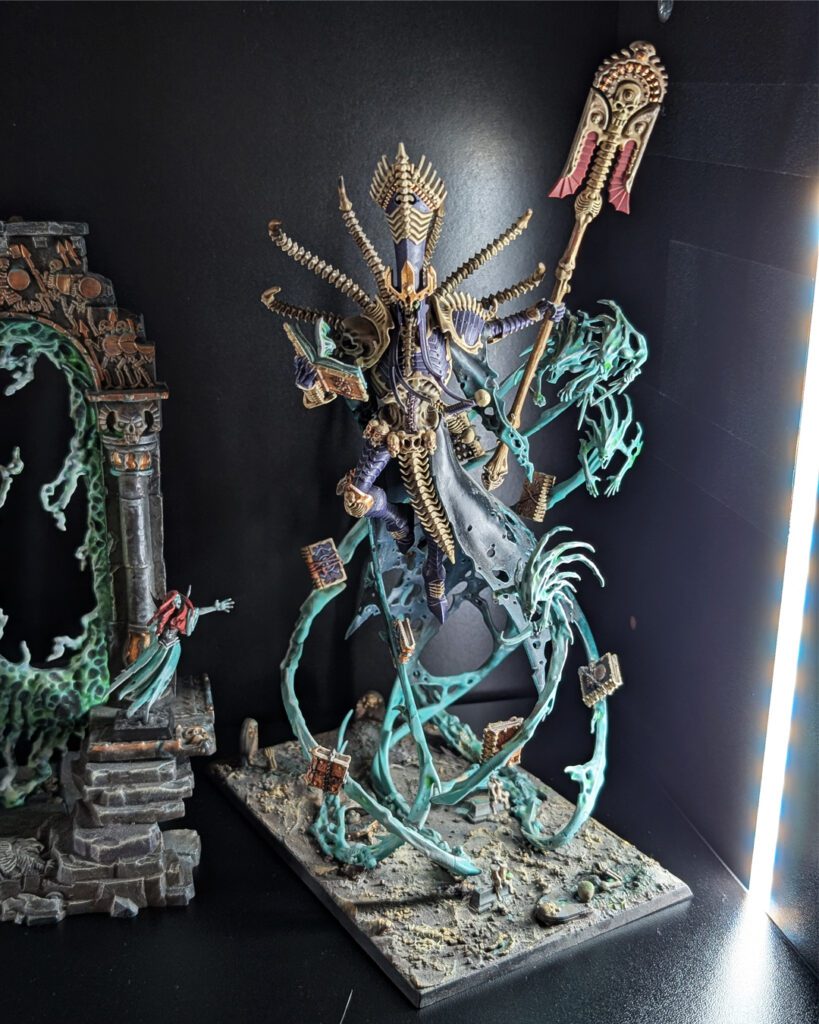
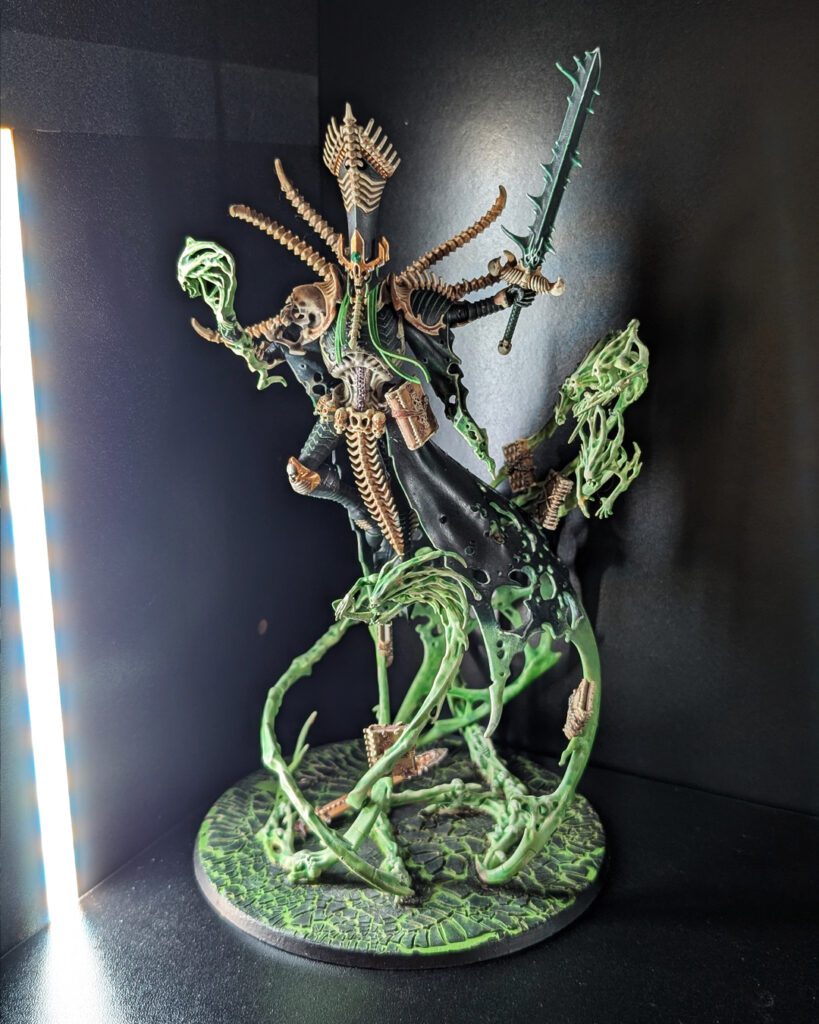
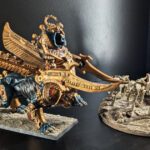
When I painted two versions of Nagash for my undead army in Warhammer Age of Sigmar, the scale and importance of the model made it impossible to treat the project casually. Centerpiece models demand patience and careful decision-making from beginning to end.
Finishing them was deeply rewarding, because the vision I had for those models finally existed in physical form on the table and the display shelf. Not only that, but I discovered a natural enthusiasm for painting other models in my undead army, which felt like a true cohesion of a larger-scale project that I was proud to display at events and also my display case.
The full story of those two Nagash models is worth telling another time, but the lesson was simple: large projects reinforce the value of following through and finishing what you start.
The Habit That Defines Creators
Many hobbyists enjoy starting projects. Creators develop a different habit – they see them to completion. Each finished model strengthens discipline, improves skill, and reinforces the identity of being someone who turns ideas into completed work.
Starting projects builds excitement.
Finishing them builds painters and ultimately, artists.
No responses yet